You're done regularly attending classes,taking daily quizzes, and complying with your academic requirements. Yourmonths of studying for the mastery of your courses are coming to a close, culminatingin the final examination.

When the word "finals" comes to mind, collegestudents can't help but think about a stressful and challenging time. The stressassociated with final exams is rooted in the pressure to succeed and get adecent job after graduation.
The Anxiety and Depression Association of America revealed that 8 out of 10 students experience high levels of stress in their daily lives. When preparing for finals week, the stress levels rise significantly. A similar study involving 2,000 college seniors showed that 64% of students that worry too much impacts their academic performance leading to the finals.
And with family and personal issuesgetting in the way of your efforts, the pressure to pass this all-importantexamination can take a toll on your well-being.
What you need are the right coping mechanisms!With the right coping mechanisms, you can reduce your feelings of anxiety and be confident about acing the finals. However, students use coping techniques based on how they perceive the situation. While others can quickly adapt to certain stressors, some find it harder to cope.
Here are 10 tips for surviving your finals week! Check out these page jumps:
- Start with an individualized study guide.
- Find a spot that is conducive to study.
- Know your priorities.
- Get adequate sleep.
- Identify a study habit that works for you.
- Take care of your body.
- Utilize "external" help.
- Give yourself a break.
- Give your social media a break, too.
- Don't panic.

Start with an individualized study guide.
When preparing for an exam, have anin-depth look at each of the subjects. A study guide is extremely helpful for prioritizingwhat to focus on.
A study guide should be more than just acollection of notes from your class. It must be your individualized tool for yourstudy method and routine.
In creating a study guide, start withthe basics:
Organize your notes.
Create a summary sheet for each topic to see how far you are in your review.
Highlight all the essential points so you don't get overwhelmed by the tons of resources and materials.
In your personalized study tool, learningto manage your time and knowing how to study ahead makes you see the overallpicture and avoid cramming.
Find a spot that is conducive to study.
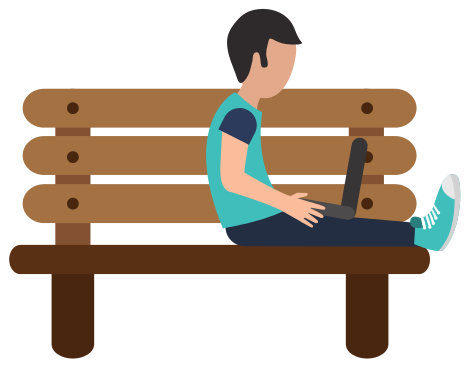
Crowded places can distract you from focusing on studying. Areas that draw you to rest and relax when you shouldn't—such as bedrooms and couch—aren't ideal either.
In finding an area conducive forstudying, consider a quiet, orderly, peaceful, and well-ventilated environment.Because you'll be doing a lot of reading, good lighting is important. Find afunctional and comfortable piece of furniture.
If you're comfortable and able to focus in a room, a coffee shop, or a library, make it your spot. Remember, what you find to be an excellent study area may not be another's choice, but focus on what works for you.
Know your priorities.

Schedule parties and get-togethers withfriends to a later date. Determine the low-priority gatherings that you can puton hold.
Remind yourself why you are studying.Know exactly what you want to accomplish. Write it on a post-it and keep it onthe front page of your study guide. This will keep you reminded of yourpriorities.
Knowing and setting your priorities is alife skill you'll need in the real world, just after you ace your finals!
Get adequate sleep.
Being sleepless in college may be the newnormal, but it doesn't have to be the case for you. Lack of sleep diminishesyour ability to retain information. Worse, you might feel the urge to sleep duringthe all-important exam day.
When preparing and studying for the finals, try to sleep and wake up every day at the same hours. According to health experts, it is best to be well-rested to stay focused. Adequate and quality sleep isn't only good for your memory; it also improves your mood.
Identify a study habit that works for you.

Success in school is determined not onlyby your intelligence; your attitude towards studying has a lot to do with it.
Study smart, as they say.
What is your learning preference? You may be a visual, auditory, or hands-on learner. Being a visual learner, you are drawn to pictures, mind maps, color-colored notes, and videos. As an auditory learner, listening to recordings and reading out loud work for you. Hands-on learners write things down while studying.
"Retention through repetition" is another great technique. Reviewing and viewing your material frequently works for a lot of students. Keep track of what you've been studying through and keep a weekly and monthly schedule planner for easy tracking.
Take care of your body.
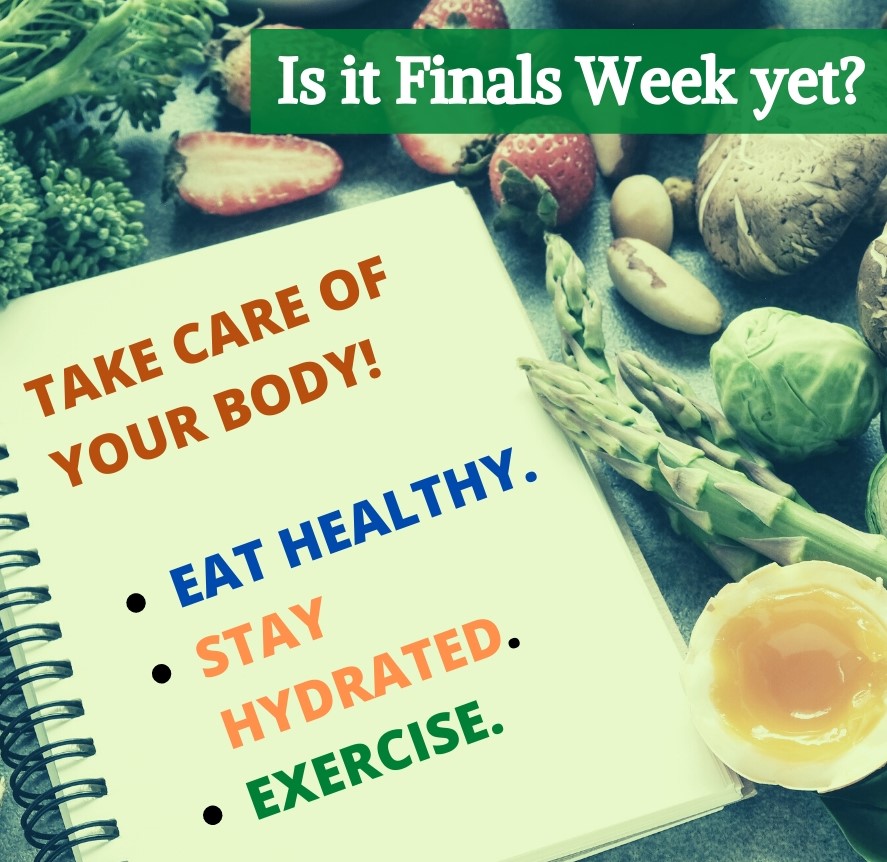
During your finals week, you're underpressure to finish a lot in just a short time. It's not uncommon to forgetto take care of your body. Always remember to:
- Eat healthy! You need all the energy and
memory power you can get, so have fresh vegetables, whole grains, and protein-richfood.
- Stay hydrated! Drink 8 to 10 glasses of
water every day. Be well-hydrated to increase energy and have better concentration.
Exercise! Sitting for long periods while studying can be exhausting for your body and mind. Exercise to increase the blood supply to the brain, relieve stress, and release the happy hormone "endorphins." So, don't just sit there and study all week long. Jog, do push-ups, or ride a bike.
Utilize "external" help.

As a student who is just starting tomake your mark in this world, don't be hesitant to ask for help:
- Seek advice and assistance from friends,
classmates, professors, and others whom you trust with their wisdom and experience.
- Join active study groups. Compare notes
and discuss difficult concepts.
- If you're exhausted and doubtful in any
way, talk to a counselor. If your school runs an Academic Coaching program, askto take part in it.
Give yourself a break.

Long hours of studying results in low retention and an overload of information. Our brain needs time to absorb them all, so take a short break in between. Reward your efforts by pausing and taking the time to rest and recharge. Doing this helps you recharge and study better for longer. Taking breaks also helps you effectively avoid the dreaded burnout.
Take short breaks to eat a healthy meal.Relax by taking a deep breath. Take a quick walk or watch a funny video to takeyour mind off studying for a little while.
In building your short breaks, rememberto strategically decide on your intervals. You do not want to be consumed by interruptionsfor a longer time than necessary.
Give social media a break, too.

Social media is arguably every student'sbiggest and worst distraction. Today's generation is so addicted to it that itis now considered as a way of life; everyone's on their phone day in and dayout! They tend to procrastinate, and check their phones out for hours on end!
Some programs and apps are aimed at putting an end to the social media habit. These include StayFocusd, WasteNoTime, and Apple's Screen Time settings that block access to certain websites for a certain period.
However, nothing beats the no-phone time, especially during study time. If you are able to turn your mobile phone off during study sessions, you are doing yourself a favor.
Don't panic.
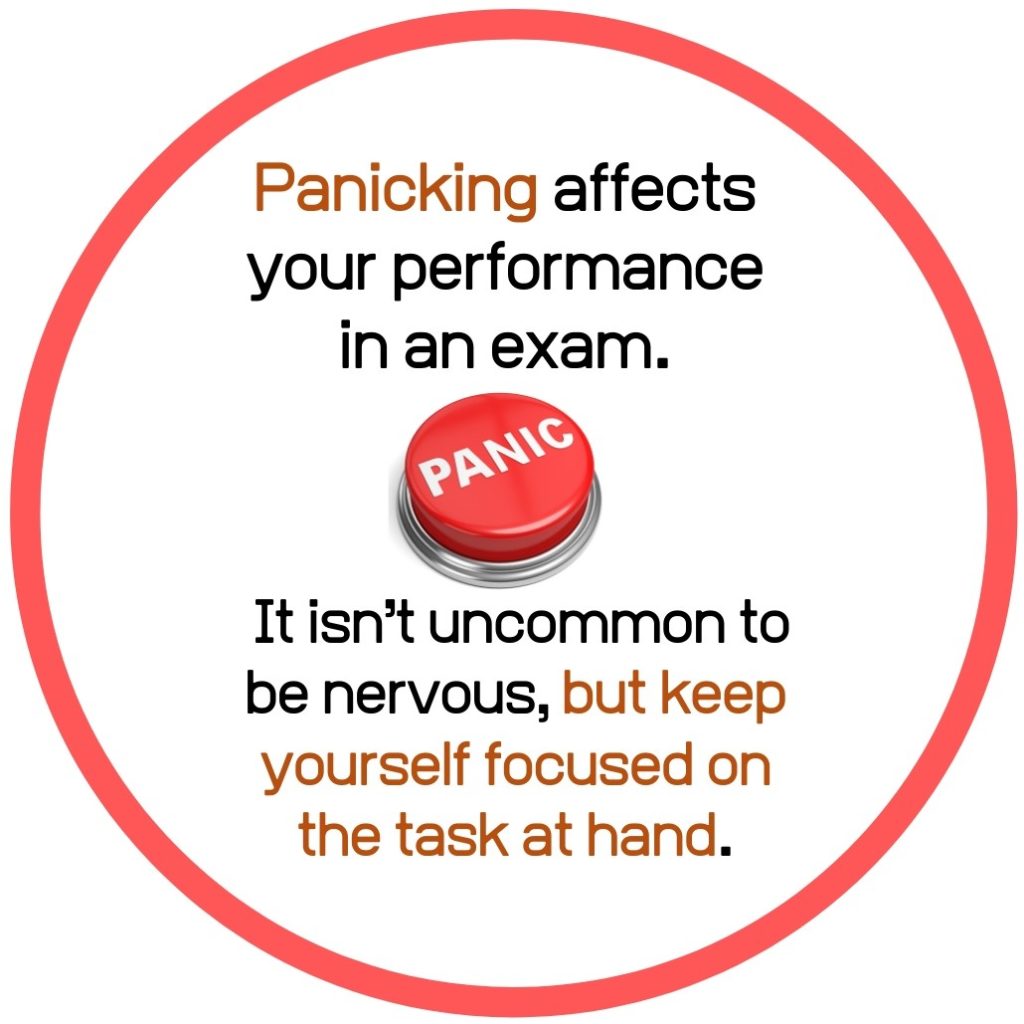
Panicking affects your performance in an exam. It isn't uncommon to be nervous, but keep yourself focused on the task at hand.
Take a deep breath and rest in knowing you studied hard for one of the most important weeks in your academic life.
Don't be hard on yourself either! It is crucialto have a realistic mindset. Take your mind off from cognitive and behavioralanxiety of "what ifs." Replace your non-rational expectations with moreresult-oriented and measurable ones.
The ultimate result of your finals week—whether you pass or fail—is not the end all and be all of your academic life.